


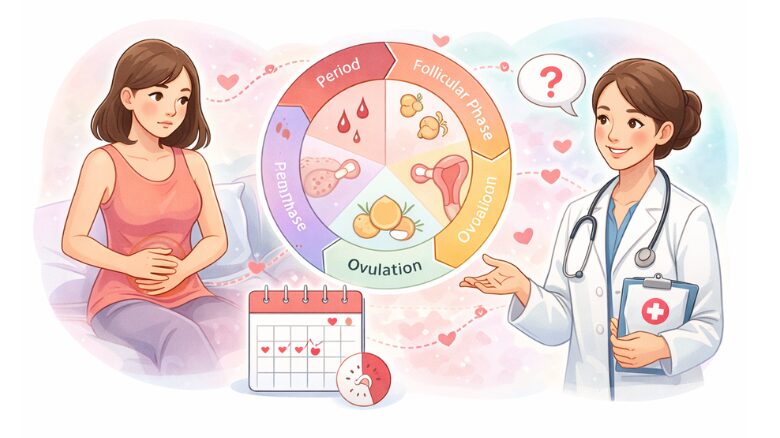
The menstrual cycle is one of the body's most reliable indicators of overall reproductive health. Yet for many women, it remains a source of confusion, anxiety, or embarrassment — discussed too little with doctors and understood too rarely in its full complexity. At Harsha Hospitals, we believe that every woman deserves clear, accurate information about what her body is doing and why. Understanding your cycle is the foundation of informed reproductive healthcare.
What a Normal Cycle Looks Like
A menstrual cycle is counted from the first day of one period to the first day of the next. While the textbook example is 28 days, normal cycles range from 21 to 35 days and can vary slightly from month to month. A typical period lasts between 3 and 7 days, with blood loss of 30 to 80 millilitres across the entire period. The blood may vary in colour — bright red at the start, darker towards the end — and may include some small clots, which is generally normal. Mild cramping in the first one to two days is common and is caused by the uterus contracting to shed its lining.
Hormonal Phases of the Cycle
The cycle is governed by four hormones: oestrogen, progesterone, follicle-stimulating hormone (FSH), and luteinising hormone (LH). In the first half, rising oestrogen prepares the uterine lining and triggers the development of an egg. Ovulation occurs at mid-cycle when LH surges. In the second half, progesterone rises to prepare the uterus for a potential pregnancy. If no fertilisation occurs, both oestrogen and progesterone fall, triggering menstruation. Many women notice physical and emotional changes tied to these hormonal shifts — bloating, breast tenderness, and mood changes in the week before a period are common and largely normal.
Signs That Warrant a Gynaecologist Visit
While variation is normal, certain changes signal that professional evaluation is needed. Heavy periods — soaking through a pad or tampon every hour for several consecutive hours — indicate abnormal uterine bleeding that may be caused by fibroids, polyps, or hormonal imbalance. Periods that are consistently very irregular or that stop entirely (amenorrhoea) may reflect thyroid dysfunction, PCOS, or significant stress. Severe cramping that disrupts daily life and does not respond to over-the-counter pain relief is a common presentation of endometriosis. Bleeding between periods, after sex, or after menopause always requires prompt investigation.
Premenstrual Syndrome (PMS) and PMDD
Many women experience PMS — a cluster of physical and emotional symptoms in the 7 to 10 days before menstruation, including mood swings, fatigue, bloating, and irritability, which resolve once bleeding begins. For a smaller number of women, these symptoms are severe enough to interfere with work, relationships, and daily functioning — a condition known as premenstrual dysphoric disorder (PMDD). PMDD is a recognised medical condition that responds well to treatment; if your premenstrual symptoms feel unmanageable, speak to a specialist at Harsha Hospitals rather than accepting them as inevitable.
Tracking your cycle using a calendar, app, or diary is a simple, powerful tool. Bring this record to your gynaecology appointment — it gives your doctor the clearest possible picture of your reproductive health over time.