


|
Read Now
Getting your Trinity Audio player ready...
|
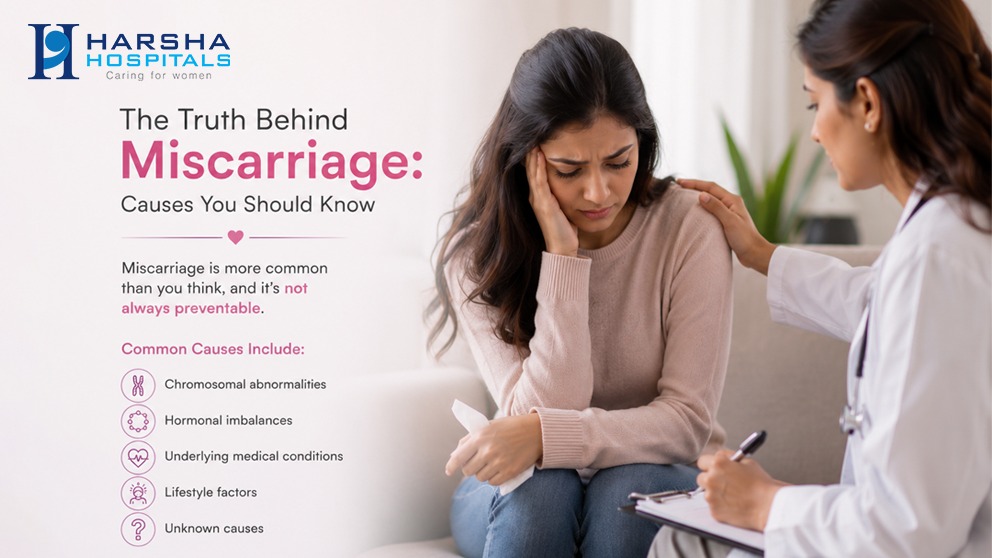
Miscarriage is one of the most painful experiences a family can face, and it is often surrounded by silence, myths, and unnecessary guilt. The truth is that miscarriage is far more common than many people realise, and in most cases it is not caused by anything the mother did or failed to do.
At Harsha Hospital, Kukatpally, we believe that clear, compassionate information helps women heal and plan for the future with confidence. In this guide, we gently explain the real causes of miscarriage, the symptoms to be aware of, and when to seek care — while reminding you that you are not alone.
If you have experienced a pregnancy loss, please be kind to yourself. A miscarriage is rarely anyone's fault, and support is available.
What Is a Miscarriage?
A miscarriage, also called early pregnancy loss, is the loss of a pregnancy before 20 weeks. It is more common than most people think — studies suggest that roughly 1 in 5 known pregnancies end in miscarriage, most often in the first trimester.
Because it is so common, it is important to understand that experiencing a miscarriage does not mean you cannot go on to have a healthy pregnancy. The large majority of women who miscarry go on to have successful pregnancies in the future.
The Real Causes of Miscarriage
Most miscarriages happen because of factors that are completely outside a mother's control. Here are the main causes of miscarriage that doctors recognise.
Chromosomal (Genetic) Abnormalities
This is the single most common cause of early miscarriage. As an embryo develops, it can sometimes receive the wrong number of chromosomes, which prevents it from developing normally. This usually happens by chance and is not inherited or caused by the parents.
Hormonal Imbalances
Hormones support a pregnancy from the very beginning. Imbalances — such as problems with progesterone, an underactive or overactive thyroid, or poorly controlled diabetes — can sometimes affect a pregnancy's ability to continue.
Problems with the Uterus or Cervix
The shape and health of the uterus matter. Conditions such as uterine abnormalities, certain fibroids, or a weakened cervix (cervical insufficiency) can increase the risk of pregnancy loss, sometimes later in the pregnancy.
Infections
Certain infections during pregnancy can raise the risk of miscarriage. This is one reason antenatal care and timely treatment of infections are so important.
Chronic Health Conditions
Long-term conditions — including uncontrolled diabetes, high blood pressure, thyroid disorders, and some autoimmune conditions such as antiphospholipid syndrome — can affect a pregnancy. The good news is that when these conditions are well managed, the risks are greatly reduced.
Lifestyle and Environmental Factors
Smoking, alcohol, recreational drug use, and very high caffeine intake have been linked to a higher risk of miscarriage. Avoiding these gives your pregnancy the best possible start.
Maternal Age
The risk of miscarriage gradually rises with age, particularly after 35, mainly because chromosomal abnormalities become more common. Age is just one factor, and many older mothers have healthy pregnancies.
Myths: What Does Not Cause Miscarriage
Many women carry unnecessary guilt because of common myths. For most healthy pregnancies, the following do not cause miscarriage:
- Normal day-to-day activity, working, or moderate exercise
- Sexual intercourse
- Everyday stress or a minor fall
- Lifting light objects or routine housework
If you have a high-risk pregnancy, your doctor may give you specific advice — but ordinary life does not cause miscarriage.
Common Symptoms to Be Aware Of
Knowing the signs of a possible miscarriage helps you seek care quickly. Contact your doctor promptly if you experience:
- Vaginal bleeding or spotting (though light spotting can occur in healthy pregnancies too)
- Cramping or pain in the lower abdomen or back
- Passing fluid or tissue from the vagina
- A sudden loss of pregnancy symptoms
These symptoms do not always mean a miscarriage is happening, but they should always be checked. Harsha Hospital provides prompt care and emergency support for
early-pregnancy concerns.
Recurrent Miscarriage: When to Seek Specialist Care
Experiencing two or more miscarriages is known as recurrent miscarriage, and it deserves a thorough medical evaluation. Tests can help identify treatable causes — such as hormonal, uterine, genetic, or immune factors — so that a plan can be made to support a future pregnancy. Many couples who seek the right help go on to have a healthy baby.
Caring for Your Emotional Wellbeing
A miscarriage is not just a physical event — it is an emotional loss, and grief is a natural response. Give yourself time and permission to heal, lean on people you trust, and know that your feelings are valid. If sadness feels overwhelming or lasting, please reach out to your doctor, who can connect you with the right support.
Why Choose Harsha Hospital in Hyderabad
Families across Kukatpally and Hyderabad trust Harsha Hospital because it offers:
- Compassionate, judgement-free care for pregnancy loss and future pregnancy planning
- Evaluation and support for recurrent miscarriage, with the facilities needed under one roof
- Comprehensive women's health and maternity services, from preconception to delivery
- A trusted name in Kukatpally, caring for women's health since 2007
- Advanced, affordable care centred on the wellbeing of every woman
Frequently Asked Questions
What is the most common cause of miscarriage? The most common cause of early miscarriage is a chromosomal abnormality in the developing embryo, which usually happens by chance and is not the parents' fault.
Can stress or normal activity cause a miscarriage? For most healthy pregnancies, everyday stress, normal activity, working, and intercourse do not cause miscarriage.
What are the warning signs of a miscarriage? Common signs include vaginal bleeding, lower abdominal or back cramping, passing tissue, or a sudden loss of pregnancy symptoms. Any of these should be checked by a doctor.
Can I have a healthy pregnancy after a miscarriage? Yes. Most women who experience a miscarriage go on to have a healthy pregnancy in the future.
When should I see a specialist about repeated miscarriages? If you have had two or more miscarriages, it is worth seeing a specialist for evaluation, as some causes are treatable.
We're Here to Support You — Harsha Hospital
Whether you are recovering from a loss or planning for the future, our caring team is here to guide you with expertise and compassion.
Harsha Hospital — Plot No. 141 & 144/1, Ayyappa Swamy Temple Road, Sapthagiri Colony, Kukatpally, Hyderabad – 500072 Phone: 040 23066393 | Email: info@harshahospitals.co.in
Medical Disclaimer: This article is for general information and awareness only and is not a substitute for professional medical advice. Every situation is different. Please consult a qualified gynaecologist or obstetrician for guidance specific to your situation.