


|
Read Now
Getting your Trinity Audio player ready...
|
Good nutrition is one of the most powerful gifts you can give your growing baby. But during pregnancy, not every popular eating plan is a healthy choice. Many trendy or restrictive diets that promise quick results can deprive both mother and baby of the nutrients they need at the most important time.
At Harsha Hospital, Kukatpally, our maternity team guides expecting mothers toward safe, balanced pregnancy nutrition as part of complete antenatal care. In this guide, we look at five unsafe diets during pregnancy, why they can be risky, and what a healthy pregnancy diet looks like instead.
Pregnancy is not the time to follow a weight-loss diet. Your body needs steady nourishment to support your baby's growth. Always talk to your doctor before changing how you eat during pregnancy.
Why Diet Matters So Much in Pregnancy
During pregnancy, your body needs extra nutrients — including protein, iron, calcium, folate, and healthy fats — to build a healthy baby and keep you strong. Diets that cut out whole food groups, sharply limit calories, or rely on unproven "cleanses" can leave dangerous gaps. Poor nutrition during pregnancy has been linked to problems with the baby's growth and development, and to health risks for the mother.
That is why the focus should always be on nourishing your body well, not on restriction.
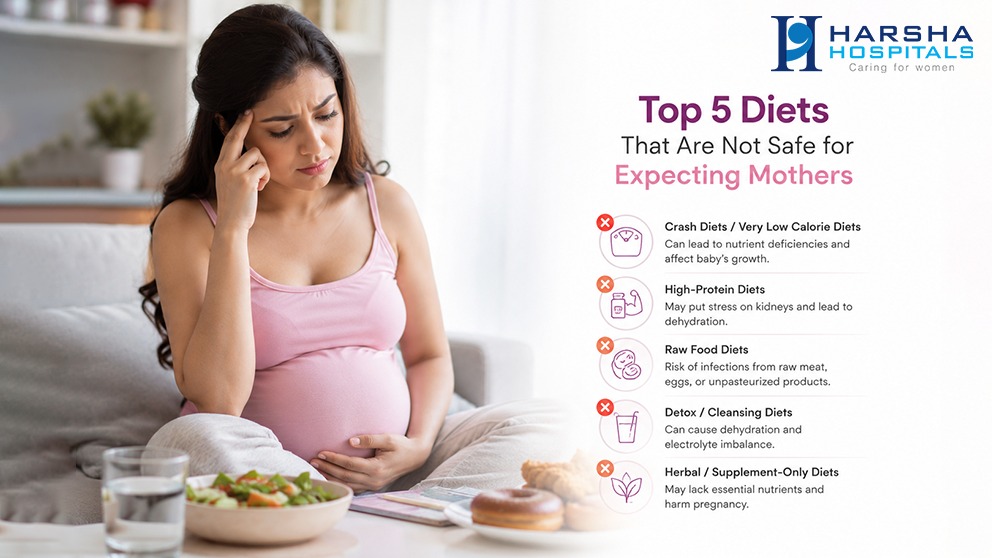
The Top 5 Diets to Avoid During Pregnancy
The Ketogenic (Very Low-Carb) Diet
Keto diets drastically cut carbohydrates and rely heavily on fats. In pregnancy, carbohydrates are an important energy source for both mother and baby, and severely limiting them can lead to nutrient gaps and a state called ketosis, the long-term safety of which in pregnancy is not well established. This is not a recommended approach for expecting mothers.
Crash Diets, Fasting, and Very Low-Calorie Plans
Any diet built around sharply cutting calories or skipping meals to lose weight is unsafe in pregnancy. Your baby depends on a steady supply of energy and nutrients to grow. Severe calorie restriction or prolonged fasting can deprive your baby of what it needs and leave you weak, dizzy, and lacking key vitamins and minerals.
Detox, Cleanse, and Juice-Only Diets
"Detox teas," cleanses, and juice-only plans are often marketed as a quick reset, but they are risky during pregnancy. They typically lack protein and other essential nutrients, can cause dehydration, and may contain herbs, laxatives, or supplements that are not safe for pregnancy. Your body and your baby do not need a cleanse — they need balanced meals.
Raw Food Diets
Raw food diets emphasise uncooked foods and often include raw or unpasteurised items. During pregnancy, raw and undercooked foods carry a higher risk of foodborne infections such as listeria and salmonella, which can be dangerous for the baby. These diets can also fall short on certain nutrients that are easier to absorb from cooked, balanced meals.
Unsupervised Restrictive or "Fad" Elimination Diets
Cutting out whole food groups without expert guidance — whether it's an extreme low-fat plan, an unbalanced high-protein fad, or a strict vegan diet followed without proper planning can lead to shortfalls in nutrients such as iron, calcium, vitamin B12, protein, and omega-3s. A vegetarian or vegan diet can be healthy in pregnancy, but only when carefully planned with your doctor or dietitian to cover every essential nutrient.
What a Healthy Pregnancy Diet Looks Like Instead
Rather than restriction, aim for variety and balance. A healthy pregnancy diet generally includes:
- Plenty of fruits and vegetables for vitamins, minerals, and fibre
- Whole grains such as whole-wheat roti, brown rice, and oats for steady energy
- Good protein sources like dal, beans, eggs, dairy, and well-cooked lean meat or fish
- Calcium-rich foods such as milk, curd, and paneer for your baby's bones
- Iron- and folate-rich foods like leafy greens, lentils, and fortified cereals
- Healthy fats from nuts, seeds, and cooking oils in moderation
- Plenty of water to stay well hydrated
Your doctor will also recommend supplements such as folic acid, iron, and calcium, and can tailor advice to your needs — for example, if you have gestational diabetes.
Foods to Avoid During Pregnancy
Alongside avoiding unsafe diets, it helps to know the common foods to avoid during pregnancy:
- Raw or undercooked meat, fish, and eggs
- Unpasteurised milk and soft cheeses
- Raw seafood and high-mercury fish
- Excess caffeine — keep intake moderate
- Alcohol, which should be avoided completely
- Unwashed fruits and vegetables
When in doubt about any food, it is always safest to ask your doctor.
Why Choose Harsha Hospital for Pregnancy Care in Hyderabad
Families across Kukatpally and Hyderabad trust Harsha Hospital for maternity care because it offers:
- Personalised antenatal nutrition guidance as part of complete pregnancy care
- Comprehensive maternity services under one roof, from antenatal care to delivery and baby care
- A trusted name in Kukatpally, caring for women's health since 2007
- Compassionate, family-centred care in a comfortable environment
- Advanced, affordable care with the safety of mother and baby at the centre
Book Your Antenatal Consultation at Harsha Hospital
Healthy eating during pregnancy is easier with expert guidance. Let our maternity team help you build a safe, balanced plan for you and your baby.
Harsha Hospital — Plot No. 141 & 144/1, Ayyappa Swamy Temple Road, Sapthagiri Colony, Kukatpally, Hyderabad – 500072 Phone: 040 23066393 | Email: info@harshahospitals.co.in
Medical Disclaimer: This article is for general information and awareness only and is not a substitute for professional medical advice. Nutritional needs vary for every mother. Please consult a qualified gynaecologist, obstetrician, or registered dietitian for guidance specific to your situation.