


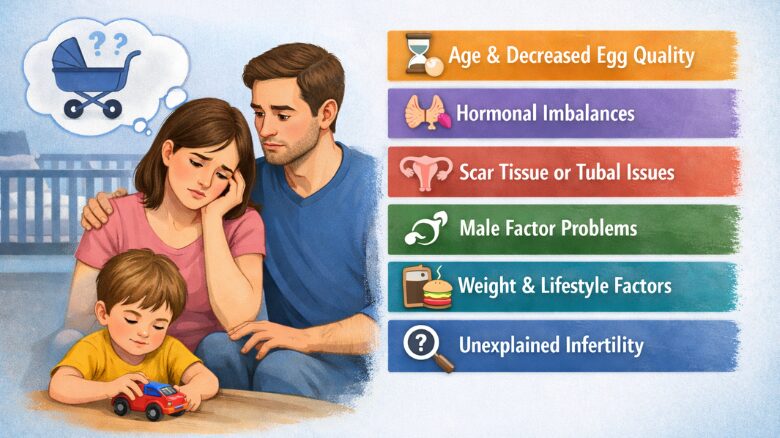
Having one child can make many couples assume that becoming pregnant again will happen easily. When months pass without a second pregnancy, the experience can be confusing, frustrating, and emotionally difficult.
This condition is known as secondary infertility. Understanding the possible reasons for infertility after first child can help couples seek appropriate medical evaluation and treatment.
Secondary infertility is a genuine fertility concern and deserves the same attention as difficulty conceiving a first child.
What Is Secondary Infertility?
Secondary infertility generally refers to difficulty becoming pregnant or carrying a pregnancy after previously having had a pregnancy.
A couple may have conceived their first child naturally but experience fertility problems when trying again.
Fertility can change over time. Age, health conditions, reproductive changes, and male fertility factors may be different from when the first pregnancy occurred.
Why Does Infertility Happen After the First Child?
There is no single reason for infertility after first child.
The cause may involve the woman, the male partner, both partners, or sometimes remain unexplained even after evaluation.
Understanding the possible causes is the first step towards finding suitable treatment.
Age-Related Fertility Changes
Age is an important factor in female fertility.A woman's egg quantity and quality naturally decline over time. The change becomes more significant with increasing reproductive age.
For example, a woman who conceived her first child several years earlier may now have different fertility potential.
Male fertility can also change with age, although the pattern differs from female reproductive ageing.
Couples should consider their current age rather than relying on their previous fertility experience.
Ovulation Problems
Problems with ovulation are a common cause of female infertility.PCOS, thyroid disorders, hormonal changes, significant weight changes, and other health conditions may affect regular ovulation.
Women with irregular or absent periods may not release an egg consistently.
Even if menstrual cycles were regular before the first pregnancy, hormonal patterns can change over time.
Polycystic Ovary Syndrome
PCOS is a hormonal condition that can affect ovulation.Some women may have mild PCOS symptoms and conceive their first child without significant difficulty. Later, irregular ovulation may become more noticeable.
Symptoms such as irregular periods, acne, unwanted facial hair, or difficulty managing weight should be discussed with a gynecologist.
PCOS-related fertility problems can often be managed with appropriate treatment.
Fallopian Tube Problems
Healthy fallopian tubes are important for natural conception.The egg and sperm usually meet in the fallopian tube. If one or both tubes are blocked or damaged, pregnancy may become more difficult.
Pelvic infections, pelvic inflammatory disease, previous surgery, or certain reproductive conditions may affect the tubes.
Specialised tests may be required to evaluate tubal health.
Endometriosis
Endometriosis is a condition in which tissue similar to the lining of the uterus grows outside the uterus.It may cause painful periods, chronic pelvic pain, pain during intercourse, or fertility problems.
Symptoms can change over time.
Some women may conceive their first child before endometriosis significantly affects fertility and later experience difficulty becoming pregnant again.
Uterine Fibroids
Fibroids are non-cancerous growths of the uterus.Many women with fibroids become pregnant naturally.
However, depending on their size and location, certain fibroids may affect the uterine cavity or reproductive function.
A pelvic ultrasound can help identify fibroids and allow your gynecologist to assess whether they may be relevant to your fertility problem.
Changes in Weight and Metabolic Health
Significant weight gain or weight loss can influence reproductive health.Insulin resistance and metabolic problems may affect hormonal balance and ovulation in some women.
Lifestyle changes alone cannot treat every cause of infertility, but healthy nutrition and appropriate physical activity are important parts of preconception care.
Male Fertility Factors
Secondary infertility is not only a female issue.Sperm count, movement, and quality can change over time.
Medical conditions, certain medicines, smoking, excessive heat exposure, and other factors may influence sperm health.
A semen analysis is an important part of fertility evaluation.Both partners should participate in the assessment rather than assuming the problem is related only to the woman.
Lifestyle Factors
Smoking and excessive alcohol use may negatively affect reproductive health.
Poor sleep, unhealthy eating habits, and lack of physical activity can also influence general and metabolic health.
Stress does not explain every fertility problem, and couples should not blame themselves for infertility.
However, managing emotional wellbeing is an important part of the fertility journey.
When Should You Consult a Fertility Specialist?
Couples are generally advised to seek fertility evaluation after 12 months of regular unprotected intercourse without pregnancy when the female partner is under 35.
Women aged 35 or older are often advised to seek help after six months.
Earlier consultation may be appropriate if periods are irregular, there is a known fertility condition, previous pelvic surgery, severe pelvic pain, or a history suggesting male fertility problems.
Your doctor can advise based on your individual circumstances.
How Is Secondary Infertility Diagnosed?
A fertility evaluation may include:
- Detailed medical and pregnancy history
- Menstrual cycle assessment
- Ovulation evaluation
- Hormonal blood tests
- Pelvic ultrasound
- Ovarian reserve assessment when appropriate
- Fallopian tube evaluation
- Semen analysis
Additional tests may be recommended based on the couple's history.
Treatment Options
Treatment depends on the identified cause.Some women may require medicines to support ovulation.Other couples may need treatment for hormonal conditions, surgery for selected reproductive problems, intrauterine insemination, or assisted reproductive techniques such as IVF.
Not every couple needs advanced fertility treatment.A personalised diagnosis helps determine the most appropriate next step.
Conclusion
Experiencing infertility after first child can be emotionally challenging, but a previous pregnancy does not guarantee that fertility will remain unchanged.
Age, ovulation disorders, PCOS, endometriosis, fallopian tube problems, fibroids, and male fertility factors may contribute to secondary infertility.
At Harsha Hospitals, couples can seek professional fertility evaluation and personalised guidance to better understand possible reproductive concerns.
If you have been trying for another baby without success, consider consulting the fertility care team at Harsha Hospitals. Timely evaluation can help identify possible causes and guide you towards appropriate treatment options.