


Polycystic Ovary Syndrome, commonly known as PCOS, is a hormonal and metabolic condition that can affect menstrual cycles, ovulation, skin, hair growth, and fertility.
While medical treatment may be necessary depending on your symptoms, regular physical activity is an important part of PCOS management.
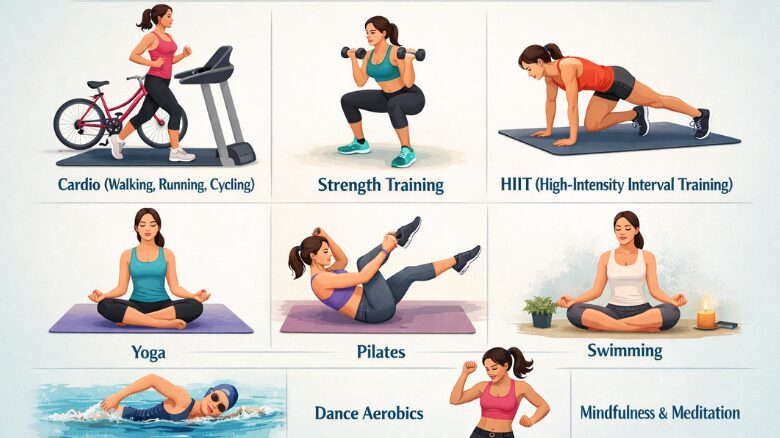
Choosing suitable exercises for PCOS can support metabolic health, improve fitness, help with weight management when needed, and promote overall wellbeing.
The good news is that you do not need an extreme workout routine. A consistent and sustainable exercise plan is often more practical than short periods of intense training.
Why Is Exercise Important for PCOS?
PCOS is often associated with insulin resistance, although not every woman with PCOS has the same metabolic profile.
Insulin helps the body's cells use glucose for energy. When the body becomes less responsive to insulin, it may produce higher levels of the hormone.Regular physical activity can support insulin sensitivity and metabolic health.
Exercise may also improve cardiovascular fitness, muscle strength, sleep, and emotional wellbeing.
For women who need to manage their weight, combining regular physical activity with balanced nutrition can be helpful.
How Much Exercise Should Women With PCOS Do?
Current international PCOS guidance recommends physical activity in line with general adult health guidelines.
Adults should aim for approximately 150 to 300 minutes of moderate-intensity aerobic activity per week or 75 to 150 minutes of vigorous activity.
Muscle-strengthening activities are also recommended on two non-consecutive days per week.Women seeking greater health benefits or modest weight loss may require more weekly activity.
However, beginners do not need to achieve these targets immediately.Start with manageable exercise and gradually increase the duration and intensity.
1.Brisk Walking
Walking is one of the simplest exercises for PCOS.It requires minimal equipment and can easily be included in your daily routine.
Brisk walking can increase your heart rate and support cardiovascular fitness.
If you are new to exercise, start with 15 to 20 minutes and gradually increase your walking time.You can walk in the morning, evening, at a park, or on a treadmill.
The key is consistency.
2.Strength Training
Strength training is particularly useful for improving muscle fitness and supporting metabolic health.
Exercises may include:
- Squats
- Lunges
- Wall push-ups
- Resistance band exercises
- Dumbbell exercises
- Glute bridges
You do not need to lift very heavy weights to begin.Proper technique is important. If you are unfamiliar with resistance training, consider working with a qualified fitness professional.
Strength training two or more times per week can be included in a balanced exercise routine.
3.Cycling
Cycling is an effective aerobic activity.You can cycle outdoors or use a stationary bicycle.Regular cycling can support heart health, stamina, and overall fitness.
Beginners can start at a comfortable pace and gradually increase the duration.If you have joint discomfort, stationary cycling may feel more comfortable than certain high-impact activities.
4.Swimming
Swimming provides a full-body workout and is generally a low-impact form of exercise.
It can improve cardiovascular endurance and muscle activity without placing excessive stress on the joints.
Swimming may be a good option for women who enjoy water-based activities.The best exercise is often one that you can maintain consistently.
5.Yoga
Yoga can improve flexibility, balance, and body awareness.It may also support relaxation and stress management.
Yoga should not be considered a replacement for all aerobic and strength activity, but it can be a valuable part of a balanced PCOS fitness plan.
Choose a qualified instructor and practise movements suitable for your fitness level.
6.High-Intensity Interval Training
High-intensity interval training, or HIIT, involves short periods of higher-intensity exercise followed by recovery periods.
For example, a workout may alternate between faster cycling and slower cycling.HIIT can be time-efficient and may support cardiovascular and metabolic fitness.
However, it is not necessary for every woman with PCOS.Beginners, women with medical conditions, or those who have been inactive for a long time should seek professional advice before beginning high-intensity workouts.
7.Dancing
Exercise does not always need to happen in a gym.Dancing can be an enjoyable way to increase physical activity and cardiovascular movement.
Zumba, aerobic dance, or simply dancing at home can help you stay active.Enjoyable exercise is often easier to continue in the long term.
8.Pilates
Pilates focuses on controlled movements, core strength, posture, and flexibility.It can complement aerobic and resistance training.
Women who spend long hours sitting may find structured Pilates sessions helpful for improving movement awareness.As with any exercise, correct technique is important.
Can Exercise Regulate Periods in PCOS?
PCOS commonly causes irregular ovulation and irregular menstrual cycles.
Lifestyle management, including physical activity, is considered an important part of PCOS care.
Exercise may support metabolic health and weight management, which can help improve reproductive function in some women.
However, exercise cannot guarantee regular periods for every woman.
If your periods remain absent or extremely irregular, consult a gynecologist.
Medical treatment may be required to manage hormonal symptoms and protect long-term reproductive health.
Can Exercise Help With PCOS Weight Management?
Yes, physical activity can support weight management.
However, women with PCOS should avoid judging progress only by the number on a weighing scale.
Improved stamina, increased strength, better sleep, healthier blood sugar patterns, and improved emotional wellbeing are also meaningful health outcomes.
Exercise should be combined with balanced nutrition and sustainable lifestyle habits.Extreme dieting and excessive exercise are not recommended.
A Simple Weekly PCOS Exercise Plan
A beginner-friendly routine may look like this:
Monday: 30 minutes of brisk walking
Tuesday: Strength training for 20 to 30 minutes
Wednesday: Yoga or gentle movement
Thursday: 30 minutes of cycling or brisk walking
Friday: Strength training
Saturday: Swimming, dancing, or another enjoyable aerobic activity
Sunday: Rest or a gentle walk
This is only a general example.
Your exercise routine should be adjusted according to your fitness level, medical history, symptoms, and personal preferences.
Tips to Stay Consistent
Consistency is more important than perfection.Choose activities you enjoy and set realistic goals.
Schedule exercise at a convenient time and avoid comparing your progress with others.Track your workouts if it motivates you.
If you miss a day, simply return to your routine rather than giving up completely.
Gradually increasing physical activity is usually more sustainable than starting with an exhausting exercise programme.
When Should You Talk to a Doctor Before Exercising?
Consult your doctor before beginning a new exercise programme if you have heart disease, uncontrolled blood pressure, severe joint problems, significant breathing difficulties, or another medical condition that may affect physical activity.
You should also seek medical advice if you experience chest pain, fainting, severe shortness of breath, or unusual symptoms during exercise.
Women undergoing fertility treatment or those who are pregnant should ask their doctor about appropriate exercise modifications.
Exercise Is Only One Part of PCOS Management
Although exercises for PCOS are valuable, PCOS management should take a complete approach.
A healthy eating pattern, adequate sleep, emotional wellbeing, and medical monitoring are also important.
Depending on your symptoms, your doctor may recommend medicines for menstrual regulation, metabolic concerns, excessive hair growth, acne, or fertility treatment.There is no single PCOS plan that works for everyone.
Conclusion
The best exercises for PCOS are the ones that improve your health and can be continued consistently. Brisk walking, strength training, cycling, swimming, yoga, dancing, Pilates, and selected interval workouts can all form part of a balanced fitness routine.
Regular physical activity supports metabolic health, cardiovascular fitness, strength, and overall wellbeing. However, exercise plans should be realistic and personalised.
At Harsha Hospitals, women can receive professional evaluation and personalised guidance for PCOS, irregular periods, hormonal concerns, and fertility-related symptoms.
If you are struggling with PCOS symptoms, consult the women's healthcare specialists at Harsha Hospitals. With the right medical guidance and sustainable lifestyle changes, PCOS can be managed more effectively.