


|
Read Now
Getting your Trinity Audio player ready...
|
You've heard it said that you're eating for two — but really, you're eating for two. That small shift in thinking matters. Pregnancy nutrition isn't about eating more; it's about eating better
— choosing foods that are as packed with goodness as possible to support your baby's growth and keep you strong.
At Harsha Hospital, Kukatpally, our maternity team guides expecting mothers toward a safe, balanced healthy pregnancy diet tailored to their needs. In 2026, the conversation around superfoods for pregnancy is clearer than ever: the most powerful foods aren't exotic or expensive. They're nourishing, accessible, and deeply beneficial when eaten regularly and well.
Always talk to your doctor or a registered dietitian before making significant changes to your diet during pregnancy — especially if you have gestational diabetes, anaemia, food allergies, or any other condition.
Why Pregnancy Nutrition Deserves Extra Attention
During pregnancy, your body needs more of nearly everything — folate, iron, calcium, protein, omega-3 fatty acids, and more. These nutrients don't just support your baby's development; they keep you healthy, energised, and better equipped to handle the demands of pregnancy and delivery. Getting them from whole, nutrient-dense foods is always the first and best approach, alongside any supplements your doctor recommends.
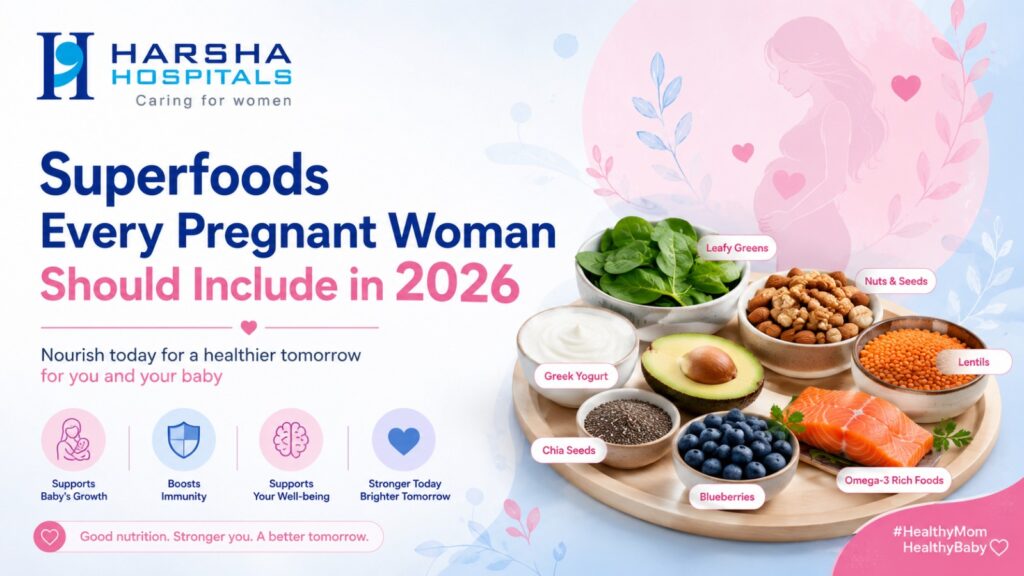
The superfoods for pregnancy below aren't trends — they're among the most reliably nutritious, safe, and doctor-recommended choices you can make every day.
The Top Superfoods for Pregnancy in 2026
1. Leafy Green Vegetables
Spinach, fenugreek (methi), amaranth, and other dark leafy greens are nutritional powerhouses. They deliver folate — essential for preventing neural tube defects in early pregnancy — along with iron, calcium, fibre, and vitamins A, C, and K. Adding them to dal, roti, soups, or smoothies is one of the simplest and most impactful choices you can make.
2. Lentils and Legumes
Dal, chickpeas, rajma, and other lentils and legumes are among the best foods for pregnant women — affordable, versatile, and rich in plant-based protein, iron, folate, and fibre. Fibre helps with the constipation that commonly affects pregnancy, while protein and iron support your baby's growth and your energy levels.
3. Dairy and Calcium-Rich Foods
Milk, curd (yoghurt), paneer, and buttermilk are excellent sources of calcium and protein — both critical for building your baby's bones and teeth and protecting yours. Curd also provides gut-friendly probiotics. If you're lactose intolerant or avoid dairy, discuss alternatives with your doctor.
4. Eggs
Eggs are one of nature's most complete foods, providing high-quality protein, healthy fats, choline (vital for your baby's brain and spinal cord development), and a range of vitamins and minerals. Always eat eggs thoroughly cooked during pregnancy to avoid the risk of infection.
5. Nuts and Seeds
A small handful of almonds, walnuts, flaxseeds, or pumpkin seeds daily delivers healthy fats, protein, magnesium, and zinc. Walnuts and flaxseeds are particularly valued for their
plant-based omega-3 fatty acids, which support your baby's brain development. Nuts also make a satisfying, energy-sustaining snack between meals.
6. Colourful Fruits
Bananas, mangoes, oranges, pomegranates, guavas, and berries bring a spectrum of vitamins, minerals, natural sugars for energy, and fibre to your plate. Vitamin C from citrus and guava also helps your body absorb iron from plant-based foods more effectively — a key pregnancy nutrition tip worth remembering. Aim for variety and whole fruit rather than juices.
7. Whole Grains
Whole-wheat roti, brown rice, oats, and millets provide sustained energy, B vitamins, iron, and fibre. Unlike refined grains, whole grains release energy steadily, helping to keep blood sugar stable — particularly valuable if you have or are at risk of gestational diabetes.
8. Sweet Potato
Sweet potato is rich in beta-carotene, which the body converts to vitamin A — important for your baby's development. It also provides vitamin C, potassium, and fibre. Easy to cook in many ways, sweet potato is a gentle, nourishing addition to any pregnancy diet.
9. Fish (Well-Cooked, Low-Mercury Varieties)
Well-cooked fish such as rohu, catla, and sardines are good sources of protein, omega-3 fatty acids, and iodine. The key during pregnancy is to choose low-mercury varieties and ensure fish is always thoroughly cooked. Avoid raw or undercooked fish entirely during pregnancy.
10. Water — Your Most Essential "Superfood"
No list of pregnancy nutrition tips is complete without water. Staying well hydrated supports your increased blood volume, helps prevent urinary tract infections, eases constipation, and reduces swelling. Sip steadily throughout the day, and aim for more if the weather is warm or you've been active.
Simple Ways to Include These Foods Every Day
You don't need to overhaul your diet overnight. Try these small, sustainable shifts:
● Add a handful of leafy greens to your dal or sabzi.
● Swap refined grains for whole-wheat options one meal at a time.
● Keep a small box of mixed nuts and dried fruit for mid-morning or evening snacks.
● Have a bowl of curd with lunch for calcium and gut health.
● Start the day with a banana or seasonal fruit alongside breakfast.
Consistency over perfection is the goal.
Foods to Be Cautious About
Even with the best intentions, some otherwise healthy foods need care during pregnancy:
● Raw sprouts and unwashed produce — rinse everything thoroughly.
● Excess vitamin A supplements — too much can be harmful; get vitamin A from food like sweet potato rather than supplements unless prescribed.
● High-mercury fish — such as swordfish, shark, and king mackerel.
● Unpasteurised dairy and raw or undercooked eggs and meat.
Always check with your doctor if you're unsure whether a particular food is safe for your pregnancy.
Why Choose Harsha Hospital for Pregnancy Care in Hyderabad
Families across Kukatpally and Hyderabad trust Harsha Hospital because it offers:
● Personalised pregnancy nutrition guidance as part of complete antenatal care
● Comprehensive maternity services from pregnancy through delivery and baby care
● Specialist support for conditions like gestational diabetes and anaemia
● A trusted name in Kukatpally, caring for women's health since 2007
● Compassionate, family-centred care with the safety of mother and baby at its heart
Frequently Asked Questions
What are the most important superfoods during pregnancy?
Leafy greens, lentils, dairy, eggs, nuts, colourful fruits, whole grains, sweet potato, well-cooked fish, and plenty of water are among the most reliably nourishing choices for a healthy pregnancy diet.
Do I need to eat special foods during pregnancy?
Not necessarily exotic ones. The most beneficial foods are nutrient-dense everyday choices — leafy greens, lentils, dairy, whole grains, and fruits — eaten consistently and in variety.
Which fruits are best for pregnant women?
Bananas, oranges, guavas, pomegranates, mangoes, and berries are excellent choices. Opt for whole fruit over juice where possible for more fibre and steady energy.
Can I eat eggs during pregnancy?
Yes — thoroughly cooked eggs are a nutritious choice during pregnancy, providing protein, choline, and vitamins. Avoid raw or undercooked eggs.
Should I take supplements as well as eating well?
A balanced diet is your foundation, but most doctors recommend key supplements during pregnancy — such as folic acid, iron, and calcium. Follow your doctor's specific guidance.
Book Your Antenatal Nutrition Consultation at Harsha Hospital
Eating well during pregnancy is one of the most powerful things you can do for your baby and yourself. Let our maternity team help you build a safe, nourishing plan tailored to your needs.
Harsha Hospital — Plot No. 141 & 144/1, Ayyappa Swamy Temple Road, Sapthagiri Colony, Kukatpally, Hyderabad – 500072 Phone: 040 23066393 | Email: info@harshahospitals.co.in
Medical Disclaimer: This article is for general information and awareness only and is not a substitute for professional medical or dietetic advice. Nutritional needs vary for every mother and condition. Please consult a qualified gynaecologist, obstetrician, or registered dietitian for guidance specific to your situation.